
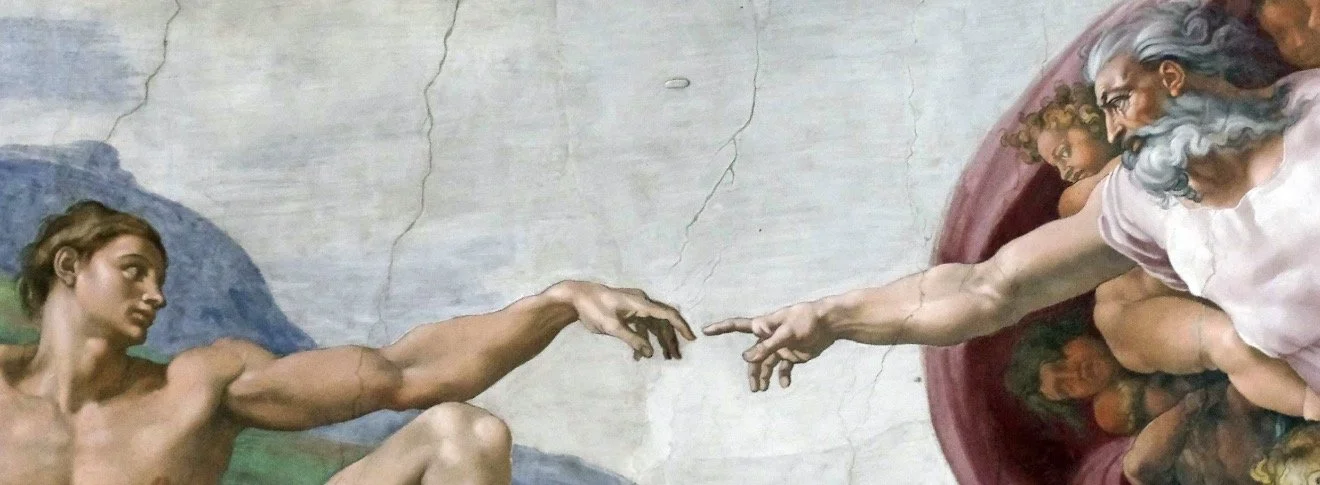
The Image of God and Human Dignity
Introduction
At Sycamore Church, we affirm without hesitation that every human being is created in the image of God — the Imago Dei. This foundational truth shapes how we see God, how we see one another, and how we practice life together as a church.
Because every person bears God’s image, every person possesses inherent worth, dignity, and value. This includes people of every race, age, socioeconomic background, ability level, and cognitive capacity. It includes individuals with physical disabilities, intellectual disabilities, developmental differences, mental illnesses, and neurological disorders.
The image of God is not diminished by weakness. It is not erased by impairment. It is not revoked by diagnosis.
We believe this not because culture tells us so, but because Scripture does.
The Biblical Foundation: Created in God’s Image
In Genesis we read:
“So God created man in his own image, in the image of God he created him; male and female he created them.” (Genesis 1:27)
The Imago Dei is not based on productivity, intelligence, independence, communication ability, or social contribution. It is rooted in God’s sovereign act of creation. Human dignity is not earned. It is bestowed.
After the fall, when sin entered the world, the image of God in humanity was distorted but not destroyed. Even after Genesis 3, Scripture continues to affirm the sacredness of human life (Genesis 9:6; James 3:9). The Bible never suggests that cognitive ability, physical strength, or mental clarity determine a person’s value.
The worth of a human being rests in who made them, not what they can do.
Jesus and the Marginalized
The ministry of Jesus further clarifies God’s heart.
Throughout the Gospels, Jesus consistently moved toward those whom society overlooked, misunderstood, or avoided — the blind, the deaf, the paralyzed, the demon-oppressed, the poor, and the socially outcast. He did not treat them as burdens. He did not treat them as projects. He treated them as persons.
In Mark 2, when a paralyzed man is lowered through the roof, Jesus addresses him tenderly: “Son, your sins are forgiven.” Before healing his body, he affirms his spiritual standing and dignity.
In Luke 14, Jesus commands his followers:
“When you give a feast, invite the poor, the crippled, the lame, the blind…” (Luke 14:13)
This is not merely a call to charity. It is a call to reorder our community life around the very people the world tends to sideline.
The kingdom of God is not built around ability. It is built around grace.
Mental Illness and the Image of God
Mental illness and neurological disorders are part of the brokenness of a fallen world. They are not evidence of lesser worth, lesser faith, or lesser spirituality.
Scripture is honest about psychological distress. The Psalms are filled with anguish (Psalm 42; Psalm 88). Elijah collapses under emotional exhaustion in 1 Kings 19. David speaks of deep inner turmoil. The Bible does not shame suffering; it gives it language.
To experience depression, anxiety, bipolar disorder, schizophrenia, PTSD, autism spectrum disorder, intellectual disability, or any other neurological or psychological condition does not make someone less human. Nor does it place them outside the reach of Christ’s love or the embrace of Christ’s church.
If anything, the gospel teaches us that God’s power is made perfect in weakness (2 Corinthians 12:9).
The Church as a Body
Paul describes the church as a body in 1 Corinthians 12. Every member is necessary. Every member belongs. And Paul goes further:
“On the contrary, the parts of the body that seem to be weaker are indispensable.” (1 Corinthians 12:22)
The church does not merely “accommodate” people with disabilities or mental health challenges. We recognize them as indispensable to the body of Christ.
Their presence teaches us patience.
Their honesty exposes our pride.
Their needs train us in love.
Their perseverance displays God’s sustaining grace.
We are not whole without them.
Our Commitment at Sycamore Church
Because we believe every person bears the image of God, Sycamore Church commits to the following:
1. A Culture of Welcome
We desire to be a church where people of all abilities can enter without fear of shame, pity, or exclusion. We will pursue a culture where differences are not merely tolerated but honored.
2. Meaningful Inclusion
We do not believe people with special needs are distractions from ministry. They are recipients of ministry and participants in ministry. We will seek practical ways for individuals of varying abilities to serve, worship, and belong.
3. Compassionate Care
We recognize that families affected by disability or mental illness often carry unseen burdens. We commit to walking with them patiently and compassionately, not offering simplistic answers but offering presence.
4. Theological Clarity
We reject the idea that disability or mental illness reflects inferior faith or spiritual deficiency. We affirm that suffering is not a sign of divine rejection but an arena where God’s grace is displayed.
5. Ongoing Growth
We acknowledge that we will not do this perfectly. We will listen, learn, and adapt as we seek to reflect the heart of Christ more faithfully.
The Gospel and Human Dignity
Ultimately, the cross of Christ confirms the value of every human being. Jesus did not die for the strong, the stable, or the self-sufficient. He died for sinners — for all of us in our weakness.
At the cross, every hierarchy collapses.
The resurrection promises a future where every body is restored, every mind is healed, and every tear is wiped away (Revelation 21:4). Until that day, the church is called to be a preview of that coming kingdom — a community where dignity is protected, weakness is embraced, and love is practiced.
Conclusion
At Sycamore Church, we affirm the Imago Dei in all people — without qualification.
We believe:
Every person is created by God.
Every person reflects God in a unique and meaningful way.
Every person is worthy of dignity, respect, and love.
Every person belongs in the worshiping community of Christ.
We do not welcome people because they are useful.
We do not welcome people because they are easy.
We welcome people because God has made them — and Christ has died for them.
May our church reflect the heart of the Savior who said, “Let the little children come to me” (Mark 10:14), and who still gathers the weak, the weary, and the overlooked into his kingdom.